

Originally published May 5, 2022 at Moviejawn.com
When it comes to erotic thrillers, there are a plethora of different varieties in the genre. However one of the most interesting subgenres is the obsessive teen thriller. Mostly due to the fact that these films typically have an R rating meaning many teens would not be able to readily see them. They also delve into more uncomfortable territory given the age difference often present in these films. In the 90s, several of these films came about that featured a teen, starved for love, who will go to any means to be noticed. Typically it is a very young girl and the desire is for an older man and it usually escalates till someone gets hurt, or dies.
So why was there such an appeal for these kinds of films? With it’s R rating it would seem that the majority of those seeing these films were adults, so who were these erotic thrillers targeting? They seem to dive into more taboo topics than the typical erotic thriller. With films like Poison Ivy (which spurred on four sequels), The Crush, and Devil in the Flesh we can see a wide array of these films that explore very different topics. Then there is also the gender reversal in the popular Mark Wahlberg film Fear where the young teen becomes the focus of an obsessive man. Even this switch has many interesting implications. These titillating films set out to let audiences explore their deepest fears and desires. While a female identifying group can certainly derive enjoyment from these films they do seem to dive into specifically male, taboo fantasies.
The films vary both in quality and subject matter but have plenty of connective tissue. Poison Ivy, which came out in 1992, features a young Drew Barrymore as Ivy. She is a poor “scholarship kid” at a prestigious school and becomes friends with the nerdy rich girl Sylvie (Sara Gilbert). Almost immediately she inserts herself into the family and will stop at nothing to feel like she is one of them. The Crush, from following year, where a young girl named Darian (Alicia Silverstone) develops feelings for Nick (Carey Elwes), the man her parents let move into the spare room in their garage. When Nick spurns her advances she decides to go after his job, his girlfriend, and his freedom to make him love her. In 1996, Fear was released, starring Reese Witherspoon as Nicole, a young girl who finds her first love in a man named David (Mark Wahlberg). What starts off as a passionate and romantic courtship turns violent once it becomes obvious Nicole’s father Steve (William Peterson) will not let the two continue on. Soon the family is being terrorized by David who will stop at nothing to have Nicole. Finally, there is Devil in the Flesh from 1998 starring Rose McGowan as Debbie, a girl who has recently lost her mother in a tragic fire. She moves in with her grandmother and starts at a new school where she meets her creative writing teacher Peter (Alex McArthur). When Peter begins to distance himself from Debbie she starts taking down anyone who she thinks is getting between them.
One area that is interesting to explore is the look and styling of the young girls. Three of the four girls explored are all blondes, with Debbie in Devil in the Flesh being the exception. Ivy and Debbie are styled the most alike. Both dress more adult for their age, often wearing short skirts and showing enough midriff to make the school administration’s head spin. They also seem to act much older than they are although the ages are not mentioned for either of these characters explicitly it is obvious that they are both meant to be minors in high school. Darian in The Crush seems to come from old money. She is typically styled in slightly more conservative wear when she is around her family or riding horses at the stables. However she does have several scenes where she is trying to look more seductive and is styled in little bikinis to catch Nick’s eye. Similarly, Nicole in Fear is typically styled in cute “babydoll” clothes and dresses. Her father comments early on about how it looks like something that she wore when she was a kid. Nicole and Darian both have the sexy but innocent look down even to their under garments which are typically white and virginal.

The look also seems to coincide with the class themes that the films have going on. Surprisingly all of them seemed to have at least some sort of class divide between the obsessed and the obsession, although Devil in the Flesh has the least commentary of them all in this area. That being said, it is obvious that the girls without much money who come from broken homes; Debbie and Ivy, are the ones portrayed as the easier and more seductively dressed of the women. In Poison Ivy, Ivy’s lack of family is mentioned several times. Her parents are not around and her aunt took her in for the money she would get if she took care of the young girl. Ivy is made out to be incredibly envious of the family and the wealth they have. As she and the daughter Sylvie become close and the family takes Ivy in, she has no qualms about asking them for money, wearing their expensive clothes, and taking out their sports cars. Her obsession is focused on the three family members but also on how she can make herself a staple in the family so that she does not have to let go of the comforts afforded to them. This is somewhat similar to the dynamic in Fear.
While David does not actively go after their money it is clear that he has unstable housing and will soon have no place to go. He makes himself desirable to everyone in the family except for the father who he is clearly trying to replace to make himself the figurehead of the family. It is also clear that the family is incredibly rich to the point that they have a guard and panic room type security systems in place, which play a major role in the climax of the film. However, both David and Ivy have an obsession that is not only about the one they are trying to be loved by, but also with making sure they can keep the stability these families represent. The one that flips this dynamic the most is The Crush while Nick is not necessarily poor it is obvious he is new in town and needs to save money at his new job before being able to afford a place of his own. Since he is living on the property that Darian’s family owns Darian seems to feel that Nick belongs to her as well. It is obvious that she is a young girl who has not had to hear the word “No” many times in her life and so when she sets her eyes on something she wants she refuses to let it go. With her money and obvious intelligence she delights in being able to insert herself into Nick’s life and have access to him and his space whenever she wants. Because she has money she feels that she owns him on some level.
Because these films all feature young girls who are more or less sexually active the films also deal with complicated scenes and emotions on the part of the older parties. There are also the age differences between the parties. The Crush has the least amount of sexual contact between the parties especially since it is made clear that Darian is 14 and Nick is 28. This does not stop uncomfortable situations from arising however, Nick and Darian share an uncomfortable kiss that seems consensual although he pulls away and immediately drives her home. There is also a scene where Nick is snooping around her room and hides in her closet when he hears someone coming. It is Darian who knows Nick is in the closet so she completely undresses in front of him and Nick makes little to no effort to look away. Devil in the Flesh has a similar scene where Peter comes home and hears someone taking a shower, assuming it is his girlfriend he opens the curtain to find Debbie fully nude and presenting herself to Peter. While he is clearly uncomfortable it is obvious that he takes several glances at her before walking away. Even after this awkward encounter, he has an erotic sex dream about Debbie.
These films are probably the most similar with their male protagonists who are made out to be the victims in the situation but also display a lack of boundaries and self awareness in the situation. Because of course they do not dislike having the attention of an attractive younger girl. These characters also make inappropriate but not uncommon comments about and to these young women. At a party hosted by Darian’s family Nick follows her out to the patio where she is alone and makes a comment about “if you were 10 years older”. In Devil in the Flesh, Peter drops Debbie off at her house after she volunteered to help with his garage sale. He spends the day gazing at her and when he is alone in the car comments “they didn’t make them like that when I was in school”. Though these men are made out to be the victims of unwanted attention from a minor it seems that neither completely dislikes it and does very little to actually stop the attention before it goes too far.

It is Poison Ivy and Fear that cross the line and get into the territory of statutory rape. Fear makes it clear that Nicole is 16 and David is 23 while it is unclear what the laws were in the Pacific Northwest around that time the couple still engages in sexual activities. There is of course the infamous scene on the rollercoaster where David uses his fingers to make Nicole climax as the rollercoaster descends, and several scenes later the couple has sex for the first time when the parents are away. Although it is clear almost from the beginning that the father does not like David and the attention he is giving his daughter, very little is mentioned about the actual age difference and the implications of it. So it is possible that there is no legal action Steven could take against David if he wanted to. The far creepier relationship plays out in Poison Ivy however, in its unrated cut where Ivy has several sexual encounters with Darryl Cooper (Tom Skerritt), Sylvie’s father. The age difference in this film are never explicitly mentioned, probably because of how erotic the film gets. The film does do a hefty amount of leg work to make the audience understand why this much older man would be having sex with a minor. His wife Georgie (Cheryl Ladd) has been dying for sometime and is often confined to her bed. Ivy happens to look like a younger version of his wife and she dresses in her clothes frequently. Darryl also faces troubles at work and is on the verge of being replaced on his tv show and he has alcohol dependency issues to deal with. Even when there is actually sexual contact in these films they do not totally demonize the male protagonist and in this case they try to make him as sympathetic as possible.
So given the complicated subject matter and content of these films, what sort of audience were these films geared towards? It is not totally clear but they all delve into some sort of male fantasy, even films like Fear, where the male character is the obsessive party. Devil in the Flesh was a straight to video release and both Fear and The Crush played on network and premium channels frequently in the 2000s. So there are a wide variety of people that could eventually have access to these films but it does seem that there is still a specifically male fantasy being played out in all of these features.
Poison Ivy feels the most complicated of these films but that seems to be that the film is about more than just Ivy and her relationship with the father Darryl, there is a budding romance between Ivy and Sylvie as well. The girls quickly bond and become friends and once Ivy quickly moves in, they also share a bed. The girls frequently gaze upon each other and fawn over each other. Ivy seems the most comfortable with taking these a step further but it is clear Sylvie does not seem interested and has not quite thought about her sexual orientation. Because the girls cannot truly let themselves fall into a relationship, they become competition, as young girls tend to do in a patriarchal society. They compete for the attention of the mother, the father, and even the dog. It becomes clear to Ivy that the way for her to secure her place in the family is to seduce the father. A relatively easy task considering his gaze is on her from the moment she first gets into his car. As Ivy begins to tend to his needs and dress in his dying wife’s clothes it becomes clear the fantasy that gets to play out. As opposed to Darryl having to deal with the messy emotions of grief and sadness over his wife he has a young, healthy replacement readily available to him. Ivy’s character seems to act so mature for her age that it makes it easier for Darryl to fall into her trap. Their first sexual encounter occurs on top of his sleeping wife with Ivy wearing one of her tight low cut dresses. This somewhat threesome scene makes her transference as the replacement feel quite literal. When his wife inevitably dies he does not need to date, or grieve, Ivy is already moved in and ready with open arms and legs.
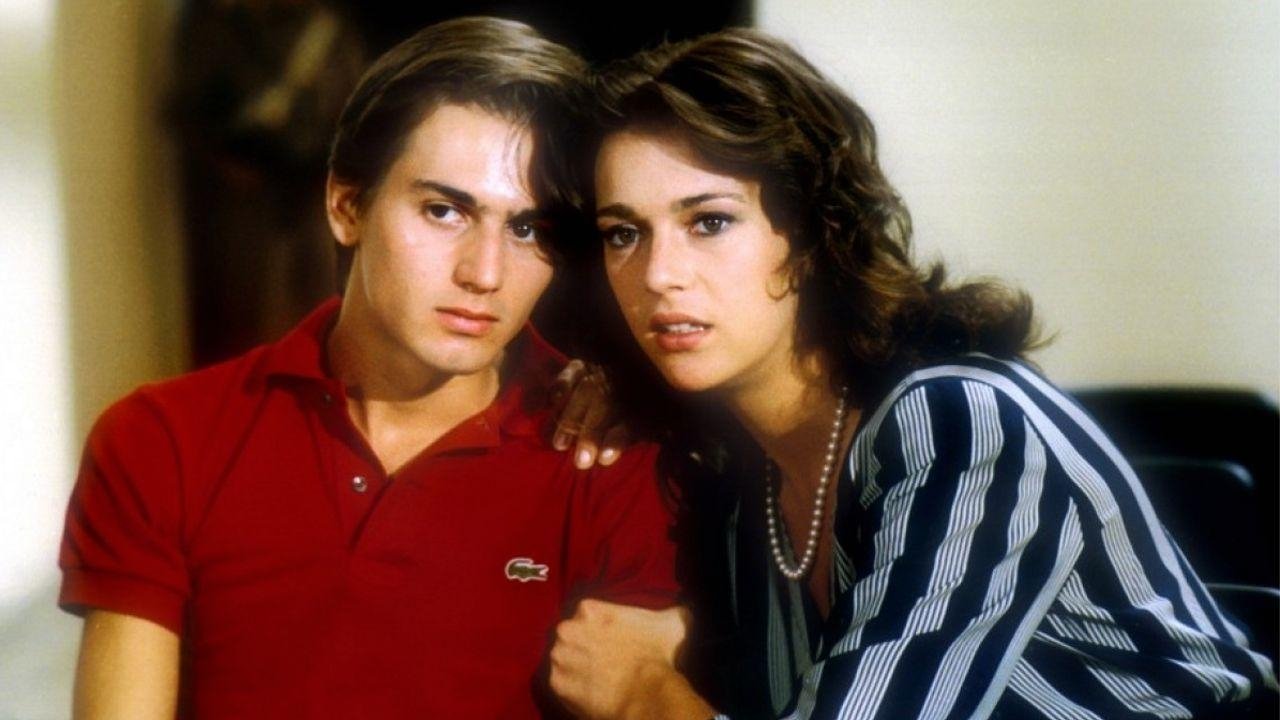
Devil in the Flesh and The Crush delve into more similar male fantasies than the other films although The Crush highlights these themes the best. Both of the protagonists become the target of a very attractive young girl. Although they flirt and gaze upon the girls they do not feel like they have done anything wrong although their efforts to stop the attention are weak at best. In The Crush it comes to a head when Darian accuses Nick of raping her and is able to gather enough evidence to get him arrested. The film ultimately feels like a reversed version of Vladimir Nabokov’s story Lolita where the girl is the obsessive party and the man does not ask for her attention and ultimately resists her advances. Both of these films end with the male protagonist fighting off the young girl and her rightfully being put behind bars. Although both of these men flirt and let the girl hang around them frequently they both feel like they have done all they can to let them down easy and show that they are not interested. In Devil in the Flesh, Peter says he never did anything wrong even with his overt flirtation. In The Crush, Nick does kiss Darian, but since he just keeps referring to them as “friends” he feels like he has done enough to let her know he is not interested. These films both highlight an attractive older man who just wants to be nice and friendly with these very young girls while getting all their attention, without having any sexual contact with them. Nick even denies the existence of a crush several times although Darian has made her interest obvious multiple times. They get to toe the line of being “nice guys” and “the hero” while also not really learning anything or changing their behavior. Which ultimately leaves them open to this sort of attention in the future. And since Devil in the Flesh has a sequel with the same two characters it seems one of them has to deal with the situation all over again. Looking at these films with a modern day lens these feel like the ultimate “not all men” fantasy.
It felt like Fear would be the outlier that delved more into female fantasy, although after viewing it, the film seems to have a unique male perspective. It feels that the taboo relationship and desire lies more in the father daughter relationship and his need to protect her. Steven and Nicole have a very strange relationship given that he was not a major part of her life until recently. While his actions seem like a father overcompensating for lost time with his daughter it is also clear that Steven has anger issues that are frequently mirrored with David’s. Now there are some interesting aspects of the film that may pique the female fantasy. It is clear that they From the first shot of Wahlberg in an incredibly tight long sleeve tee he is also being objectified by the camera. Their courtship at the beginning of the film also seems to show the appeal of dating an older man; he’s soft spoken and listens, he compliments her frequently, he does not look at other women, he showers her with gifts, and he is very protective of her. However as his violent and obsessive tendencies become revealed, it is clear the ultimate fantasy is still a male one, and the father’s at that. He clearly wants to keep his daughter “his little girl” forever. He spirals when he realizes she has lost her virginity and decides it is a reflection on him as a parent.
Although the family loves David his dislike of him from the beginning means that he gets to be 100% in the right by the time we see David’s true murderous nature. The film becomes more about these two very different men fighting to be the alpha and claim the prize. With his career as an architect he has been able to create a house with a state of the art security system that will keep him and his family safe. He frequently uses it to spy on his family and see what they are doing and when it ultimately fails to protect them he has to summon up with manhood to fight David one on one. In the end it becomes the ultimate dad fantasy of protecting his family and his young innocent daughter. Plenty about this film feels incestious including how the father, daughter, and step-mother all have jealousy issues about each other which taps into more of the taboo fantasies of the film. Even though Nicole is the one hurt and abused by David the most, dad is the one that gets to step in and be the true victor.
While these films all dig into some different territories, the obsessive teen thriller subgenre is rife with forbidden subject material. While these films are all fairly heavy on the sleazy side, there are plenty of interesting themes they offer. Revisiting these films with a 2021 lens is especially interesting given the more serious conversations around consent and the me too movements (which Alyssa Milano and Rose McGowan have played a major role in). It would also be interesting to see what remakes and reboots of these films could look like, and if they still have interesting social commentary to delve into. While the films highlighted here have their differences it is clear that the male gaze is still very present in all of them even when they are getting into awkward and problematic subject matter. It makes one wonder how self aware these creatives were when creating these movies. One thing is certain, the teen obsession erotic thriller is a fascinating realm that has plenty to say.
 The Neon Banshee